Do you sudoku?

SudokuOver the past few years I have started playing sudoku.  When I started playing sudoku it was just something to do to waste time.  But, as I started playing more and more I became intrigued with how it expanded my mind.  In the beginning I played a paper based version but as I became more adept, I started using a computer based app because I needed the game to move faster and give me direct feedback.  This direct feedback is what I believe started to expand my mind. In the beginning I played using a "process of elimination" methodology where I used "pencil marks" to eliminate the improper choices in each box.  At the higher difficulty levels I started to see that the process of elimination methodology started to morph into a kind of logic where I didn't even need to use the pencil marks anymore.

It was kind of weird because I would get stuck and find myself just sitting there staring at the screen, but then something would just happen and my mind would come up with a possible logic to figure out a sequence.  It was kind of a "if this then that" type of logic which a majority of time worked out.  It would always amaze me how my brain would get stuck then unstick itself if I kept working on it.

This is kind of like Aikido training.  We get to a certain place with our techniques and start to think, "Hmm, I am starting to get a hang of this" then as we move up in ability we get stuck again.  As we keep training somehow we move through it and get unstuck but we can only do this is we keep on training.

I am fascinated how humans have capacity to unstick themselves when they are posed with a problem.  Whether it is a sudoku problem or an Aikido problem, all we need to do is keep on working on it.

Will robots be able to learn Aikido in the future?

b-pirate-6-4I recently read an interesting story about a robot that has been developed that can adapt to being injured.  It made me wonder if a robot could someday learn Aikido. Here is an excerpt from that article on Fastcompany.com:

A new study published today in Nature explains how robots can use a sort of "evolutionary algorithm" to learn new ways of operating after being injured, according to the MIT Technology Review. Take out one of its legs, and the robot uses rapid-fire calculations to figure out how to keep moving.

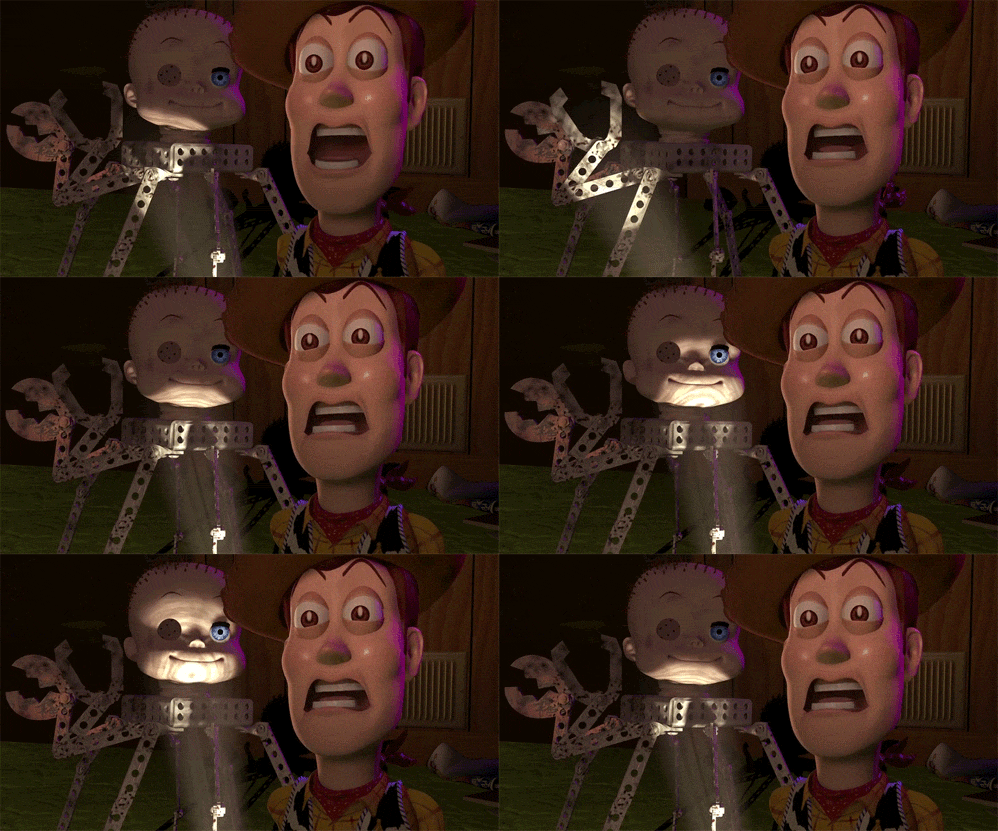
The MIT Technology Review lays it out in horrifying detail, reminiscent of a certain Toy Story character:

In a video accompanying the paper, researchers show a spider-like robot that suffers an injury to one of its six legs. The creature starts trying new ways of moving, and in about 40 seconds regains 96 percent of its speed, looking less like a broken toy and more like a wounded animal crawling away.

The amount of speed that the robot recovers is staggering and incomparable to humans who could never regain that much just after being injured.  The robot can do so because it does not feel pain.  Which brings me to the point as to why a robot like this cannot learn Aikido.  Don't get me wrong a robot can learn Aikido or any martial art at a technical level where the moves are nothing more than perfunctory.  But, true Aikido requires one to have a kokoro or spirit (心)  and ki (氣).  These two elements make up this idea of "consciousness" in human beings.  Yoda in Star Wars deftly describes when he said, "Size matters not. Look at me. Judge me by my size, do you? Hmm? Hmm. And well you should not. For my ally is the Force, and a powerful ally it is. Life creates it, makes it grow. Its energy surrounds us and binds us. Luminous beings are we, not this crude matter. You must feel the Force around you; here, between you, me, the tree, the rock, everywhere, yes. Even between the land and the ship."  The force he is referring to is ki (氣) and the luminousness is spirit (心).  To be aware of oneself is not only how we are able to feel pain but also what makes us able to connect with other human beings.  A robot cannot make a true connection because it has not spirit or consciousness.  This connection is what makes Aikido "work."  As Yoda would say, "It is not this crude matter" when referring to our bodies.  It is our minds or our consciousness that makes it work.  Therefore in a circuitous way - no robots cannot truly learn Aikido.

https://www.youtube.com/watch?v=HMUKGTkiWik

Read the full article here: http://m.fastcompany.com/3046749/fast-feed/were-doomed-robots-can-now-learn-to-adapt-to-injuries


The Way is in training

hyakusen renma, veteran of many battles百戦錬磨Hyakusen Renma Literal translation: 100 battles gains improvement Figurative meaning: To gain wisdom through experience

With this mindset in training is how one improves.  Aikido is an experiential martial art.  One needs to do it to improve upon it.  Sensei often alluded to  this when he said, "The Way is in training."  If we don't come to class, how do we expect to improve?

Don't do anything

In Aikido, we don't practice these techniques to be able to "do" things to other people.  What we are "doing" is effecting change in ourselves.  Shifting our perspective on what it means to study Aikido is one of the hardest things to do.  Don't try and do things to others, just do them to yourself.

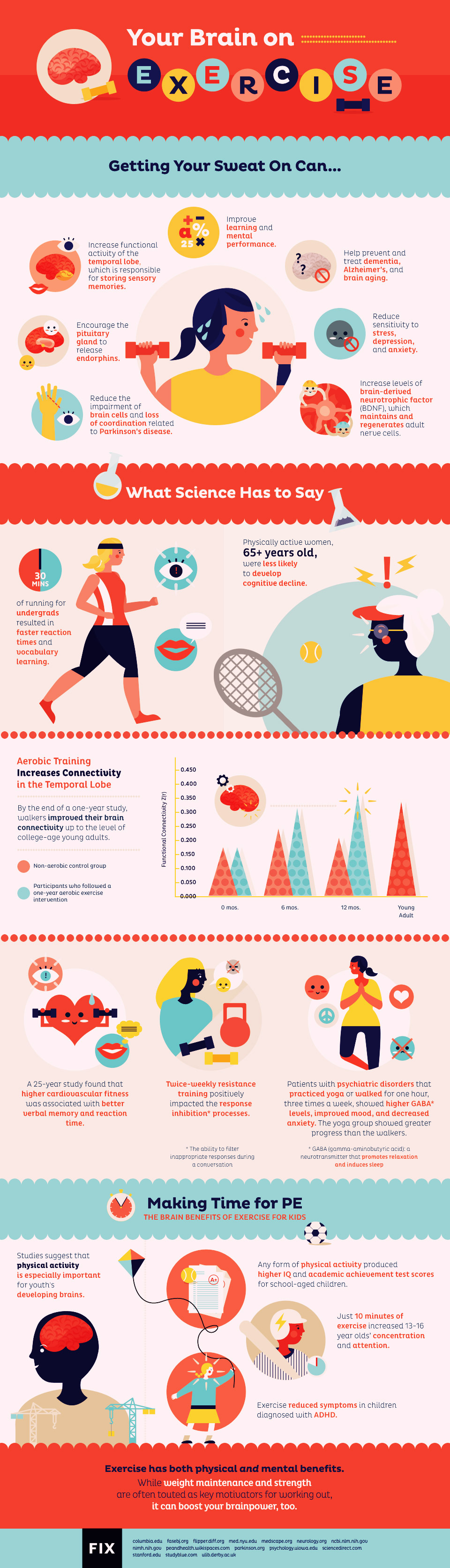
Aikido like all physical activity is good for you!

Aikido, like all forms of movement, is good for us.  Studies have shown that those who make physical activity part of their daily lives feel better physically, emotionally and mentally.  Sensei said, "One must make Aikido training part of their daily lives like brushing their teeth."  So, if we are thinking, "Should I go to class today?"  The obvious answer is "Yes," because it is good for us.  

brain-on-exercise-final

Old Kendo video from 1897

Here is an interesting video from 1897 that could be the first ever film of kendo.   It looks like a sort of controlled melee where different people are striking different opponents using long swords and short swords.  It even appears that one of the kendoist is using his sword in a European fencing manner.  I love the kid in the background beating the drum and the guy blowing the conch or is it a wine pouch?  

https://www.youtube.com/watch?v=WN9SDF05nX0

Actions speak louder than words

“Your beliefs don't make you a better person, your behavior does.”- Sukhraj S. Dhillon


The training makes us stronger

"What does not kill him, makes him stronger." - Friedrich Nietzsche Training in the martial arts is supposed to be hard.  There are no easy roads to the top.  The experience is as only as difficult as one chooses to see it that way.  For the best result, choose to see it as something that will make you stronger.

I recently watched a video documentary about the famous judo shiai (tournament) between the legendary Yasuhiro Yamashita and Hitoshi Saito.  The tournament was Yamashita's swan song and his last competitive bout.  Prior to this match, Saito had never won against Yamashita and so he knew that this was his last chance to beat him.  In the match there was a controversial decision that did not go Saito's way and from that point Yamashita ground him down to take a yusei or judge's decision victory.  It was a crushing blow to Saito and he himself said that it is something he thinks about every day.

Three years later, Saito found himself in a rather tough bout in the gold medal match at the Seoul Olympics where, coincidentally, Yamashita was a broadcaster and sitting in the press box.  There was 20 seconds left and the match was a draw and Saito looked up into the stands and made eye contact with Yamashita and both men gave each other a nod.  In that moment, Saito realized that Yamashita had given him the fighting spirit he needed with all those losses over the years.  Saito went on to get the judge's decision and the gold medal.

There is a saying in Japanese, "An apprentice near a temple will recite the scriptures untaught" which means that the environment is where our character is created.  So what Nietzsche says can be true, but we must first see it that way.  Generally this happens in hindsight, but our experience would be that much better if we could see it in the present moment.  After all, it is our choice.

Watch the whole video here: https://www.youtube.com/watch?v=l72hMWkR500


The true battle is inside of you

519DdofjD5L._SY344_BO1,204,203,200_"Fighting isn't all there is to the Art of War. The men who think that way, and are satisfied to have food to eat and a place to sleep, are mere vagabonds. A serious student is much more concerned with training his mind and disciplining his spirit than with developing martial skills."- Miyamoto Musashi discussing the Way with his disciple Jotaro from the novel Musashi by Eiji Yoshikawa

Although Eiji Yoshikawa's book about Musashi is fictional, this quote is quite apropos.  It takes so long to get past the "fighting" to get to the real heart of the situation.  Inside of each of us is where the real battle takes place.  Any altercation before that is just a distraction.  Any fighting outside of that is just a waste of time.  Until we can realize that we are our enemy, the battle will never truly begin.


Today is a gift!

I came across this piece that newspaper columnist Erma Bombeck wrote in 1979.  As I read over the list I found myself nodding in agreement.  I hope you will too and join me as I try and learn from her "mistakes."  What did Master Oogway say in Kung-Fu Panda? “Yesterday is history, tomorrow is a mystery, and today is a gift... that's why they call it present”

This piece seems like something nice to read on a rainy day like today. Enjoy!

If I Had My Life to Live Over By Erma Bombeck

Someone asked me the other day if I had my life to live over would I change anything.

My answer was no, but then I thought about it and changed my mind.

If I had my life to live over again I would have waxed less and listened more.

Instead of wishing away nine months of pregnancy and complaining about the shadow over my feet, I'd have cherished every minute of it and realized that the wonderment growing inside me was to be my only chance in life to assist God in a miracle.

I would never have insisted the car windows be rolled up on a summer day because my hair had just been teased and sprayed.

I would have invited friends over to dinner even if the carpet was stained and the sofa faded.

I would have eaten popcorn in the "good" living room and worried less about the dirt when you lit the fireplace.

I would have taken the time to listen to my grandfather ramble about his youth.

I would have burnt the pink candle that was sculptured like a rose before it melted while being stored.

I would have sat cross-legged on the lawn with my children and never worried about grass stains.

I would have cried and laughed less while watching television ... and more while watching real life.

I would have shared more of the responsibility carried by my husband which I took for granted.

I would have eaten less cottage cheese and more ice cream.

I would have gone to bed when I was sick, instead of pretending the Earth would go into a holding pattern if I weren't there for a day.

I would never have bought ANYTHING just because it was practical/wouldn't show soil/ guaranteed to last a lifetime.

When my child kissed me impetuously, I would never have said, "Later. Now, go get washed up for dinner."

There would have been more I love yous ... more I'm sorrys ... more I'm listenings ... but mostly, given another shot at life, I would seize every minute of it ... look at it and really see it ... try it on ... live it ... exhaust it ... and never give that minute back until there was nothing left of it.


A beautiful view

The Solitary Cherry Tree The Solitary Cherry Tree is located at the base of Mt. Iwate at the Koiwai Farm in Shizukuishi in Japan.  The sakura or cherry blossom tree blooms against the backdrop of the snow covered Mt. Iwate.  This tree was planted over 100 years ago and gets 750,000 visitors every year during hanami or cherry blossom viewing season.

540a2d32e87518b7d98613b27a2bf643


Where are you?

tai-no-henko-drawingThere are many mechanisms at varying levels that make each Aikido technique "work."  Most mechanisms depend on the skill of the practitioner and their body type.  One of those variables is positioning.  Positioning can be defined as the place in reference to your opponent where one is supposed to be at the appropriate time.  One's positioning will dictate what to do and how to do it. How does one get into the proper position?  Footwork.  Footwork is the basis for all positioning.  Without footwork it would be impossible to get into the right position.

Be a good student

It is not enough to be physically strong or athletic when it comes to getting good at Aikido.  Those things will come to every person in time.  "Good" students all share the same traits.  Here are just some of the characteristics that make up a good Aikido student: Listen:  Good students actively listen to what the teachers are saying.

Watch: Good students attentively watch what the teachers are doing.

Copy: Good students conscientiously copy what the teachers are teaching.

Work hard: Good students put in the time necessary to get good.

Be on time: Good students understand the value of time and thus show up early rather than late.

Persevere: Good students know that life is a marathon and not a sprint so diligence and determination are needed to get good.

Help: Good students help others get good.

Forgive: Good students know that they are not perfect nor are their teachers or classmates so they forgive themselves and their others because they are only human.

What is the sound of serenity?

I found this video on YouTube.  It boasted that millions of people had used it to not only fall asleep but to sleep better as well.  After watching/listening to it for a few minutes, I am sure that it is true.  One of the things that we strive for the most in our lives and in our training is this sense of calmness.  In Aikido when we are confronted, the first stage is harmony.  Harmony within ourselves and then harmony with the opponents attack.  If one doesn't have harmony, then it is not Aikido.  Here is what harmony feels like and sounds like.  

https://www.youtube.com/watch?v=eKFTSSKCzWA&feature=youtu.be

Life goes on...

"People will screw you over. They will screw you hard. But, you know what? It’s okay. Think about when you were five and someone stole your toy or did something awful to you. Can’t recall a moment like this? Exactly. Life goes on." - Pat Pace I read an interesting article about memories and how when we recall a memory we are just recalling the last time we thought of that memory and thus the memory is distorted. http://www.themarysue.com/memory-distortion-in-brain/

Think about this.  It is really true.  All of us are guilty at some time or another of living in the past.  But, what past are we really living in?  Generally it is the most strongest emotion we experience in that moment.  That is why Cognitive Behavioral Therapy (CBT) works so well.  Basically with CBT we are re-training our brains to see that moment differently.

Living in the past holds us back from living in the moment.  As martial artists, yesterday is an illusion and there is no tomorrow. If we won't let go of the yesterday, how can we swim towards a better tomorrow?

Make the goal conform to you - this is the way of Aikido

morihei-ueshiba-iriminage-setupI recently read a letter that writer Hunter S. Thompson wrote to a friend when he was 22 years old which basically sums up the Aikido way of looking at goals.  


April 22, 1958 57 Perry Street New York City

Dear Hume,

You ask advice: ah, what a very human and very dangerous thing to do! For to give advice to a man who asks what to do with his life implies something very close to egomania. To presume to point a man to the right and ultimate goal— to point with a trembling finger in the RIGHT direction is something only a fool would take upon himself.

I am not a fool, but I respect your sincerity in asking my advice. I ask you though, in listening to what I say, to remember that all advice can only be a product of the man who gives it. What is truth to one may be disaster to another. I do not see life through your eyes, nor you through mine. If I were to attempt to give you specific advice, it would be too much like the blind leading the blind.

“To be, or not to be: that is the question: Whether ’tis nobler in the mind to suffer the slings and arrows of outrageous fortune, or to take arms against a sea of troubles … ” (Shakespeare)

And indeed, that IS the question: whether to float with the tide, or to swim for a goal. It is a choice we must all make consciously or unconsciously at one time in our lives. So few people understand this! Think of any decision you’ve ever made which had a bearing on your future: I may be wrong, but I don’t see how it could have been anything but a choice however indirect— between the two things I’ve mentioned: the floating or the swimming.

But why not float if you have no goal? That is another question. It is unquestionably better to enjoy the floating than to swim in uncertainty. So how does a man find a goal? Not a castle in the stars, but a real and tangible thing. How can a man be sure he’s not after the “big rock candy mountain,” the enticing sugar-candy goal that has little taste and no substance?

The answer— and, in a sense, the tragedy of life— is that we seek to understand the goal and not the man. We set up a goal which demands of us certain things: and we do these things. We adjust to the demands of a concept which CANNOT be valid. When you were young, let us say that you wanted to be a fireman. I feel reasonably safe in saying that you no longer want to be a fireman. Why? Because your perspective has changed. It’s not the fireman who has changed, but you. Every man is the sum total of his reactions to experience. As your experiences differ and multiply, you become a different man, and hence your perspective changes. This goes on and on. Every reaction is a learning process; every significant experience alters your perspective.

So it would seem foolish, would it not, to adjust our lives to the demands of a goal we see from a different angle every day? How could we ever hope to accomplish anything other than galloping neurosis?

The answer, then, must not deal with goals at all, or not with tangible goals, anyway. It would take reams of paper to develop this subject to fulfillment. God only knows how many books have been written on “the meaning of man” and that sort of thing, and god only knows how many people have pondered the subject. (I use the term “god only knows” purely as an expression.) There’s very little sense in my trying to give it up to you in the proverbial nutshell, because I’m the first to admit my absolute lack of qualifications for reducing the meaning of life to one or two paragraphs.

I’m going to steer clear of the word “existentialism,” but you might keep it in mind as a key of sorts. You might also try something called Being and Nothingness by Jean-Paul Sartre, and another little thing called Existentialism: From Dostoyevsky to Sartre. These are merely suggestions. If you’re genuinely satisfied with what you are and what you’re doing, then give those books a wide berth. (Let sleeping dogs lie.) But back to the answer. As I said, to put our faith in tangible goals would seem to be, at best, unwise. So we do not strive to be firemen, we do not strive to be bankers, nor policemen, nor doctors. WE STRIVE TO BE OURSELVES.

But don’t misunderstand me. I don’t mean that we can’t BE firemen, bankers, or doctors— but that we must make the goal conform to the individual, rather than make the individual conform to the goal. In every man, heredity and environment have combined to produce a creature of certain abilities and desires— including a deeply ingrained need to function in such a way that his life will be MEANINGFUL. A man has to BE something; he has to matter.

As I see it then, the formula runs something like this: a man must choose a path which will let his ABILITIES function at maximum efficiency toward the gratification of his DESIRES. In doing this, he is fulfilling a need (giving himself identity by functioning in a set pattern toward a set goal), he avoids frustrating his potential (choosing a path which puts no limit on his self-development), and he avoids the terror of seeing his goal wilt or lose its charm as he draws closer to it (rather than bending himself to meet the demands of that which he seeks, he has bent his goal to conform to his own abilities and desires).

In short, he has not dedicated his life to reaching a pre-defined goal, but he has rather chosen a way of life he KNOWS he will enjoy. The goal is absolutely secondary: it is the functioning toward the goal which is important. And it seems almost ridiculous to say that a man MUST function in a pattern of his own choosing; for to let another man define your own goals is to give up one of the most meaningful aspects of life— the definitive act of will which makes a man an individual.

Let’s assume that you think you have a choice of eight paths to follow (all pre-defined paths, of course). And let’s assume that you can’t see any real purpose in any of the eight. THEN— and here is the essence of all I’ve said— you MUST FIND A NINTH PATH.

Naturally, it isn’t as easy as it sounds. You’ve lived a relatively narrow life, a vertical rather than a horizontal existence. So it isn’t any too difficult to understand why you seem to feel the way you do. But a man who procrastinates in his CHOOSING will inevitably have his choice made for him by circumstance.

So if you now number yourself among the disenchanted, then you have no choice but to accept things as they are, or to seriously seek something else. But beware of looking for goals: look for a way of life. Decide how you want to live and then see what you can do to make a living WITHIN that way of life. But you say, “I don’t know where to look; I don’t know what to look for.”

And there’s the crux. Is it worth giving up what I have to look for something better? I don’t know— is it? Who can make that decision but you? But even by DECIDING TO LOOK, you go a long way toward making the choice.

If I don’t call this to a halt, I’m going to find myself writing a book. I hope it’s not as confusing as it looks at first glance. Keep in mind, of course, that this is MY WAY of looking at things. I happen to think that it’s pretty generally applicable, but you may not. Each of us has to create our own credo— this merely happens to be mine.

If any part of it doesn’t seem to make sense, by all means call it to my attention. I’m not trying to send you out “on the road” in search of Valhalla, but merely pointing out that it is not necessary to accept the choices handed down to you by life as you know it. There is more to it than that— no one HAS to do something he doesn’t want to do for the rest of his life. But then again, if that’s what you wind up doing, by all means convince yourself that you HAD to do it. You’ll have lots of company.

And that’s it for now. Until I hear from you again, I remain,

your friend, Hunter

When we struggle toward achieving our goals that is not Aikido, but more along the lines of the modern idea of what it means to "achieve."  We achieve as we "suffer through" countless battles on a collision course with achieving our goals.  This is completely the opposite in Aikido.  At the core of the philosophy of Aikido is this idea of "harmony."  Harmony in a modern or western sense generally conjures up feeling of someone cowering or recoiling away from something in weakness.  On the contrary, Aikido meets the confrontation harmoniously by aligning with it.  We do not create a contentious relationship where we meet the confrontation head on which will cause us to be changed by the challenge.  Hence as Thompson advises his friend above, "We must make the goal conform to the individual, rather than make the individual conform to the goal."  This is harmony and thus Aikido.
 

We get to choose the right path...

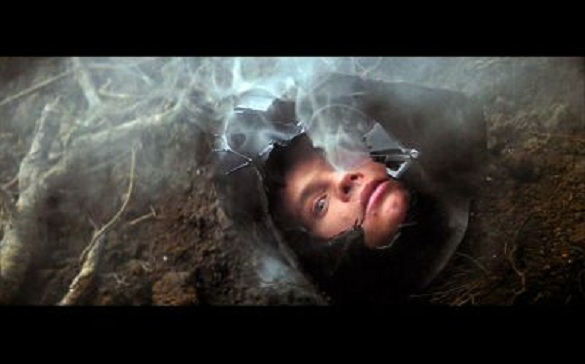
"It is not the accumulation of extraneous knowledge, but the realization of the self within that constitutes true progress." - Okakura Kakuzo on Judo Luke-Dark-side-treeIn The Empire Strikes Back, Luke is sent into the Dark Side Cave by Yoda. Yoda says, "That place… is strong with the dark side of the Force. A domain of evil it is. In you must go.  What's in there?  Only what you take with you."  In the cave Luke is confronted by Vader and he strikes him down, but as Vader's helmet falls to the ground it is Luke's face that appears in it.  In the DVD commentary, George Lucas stated that,  "Had Luke gone into the cave with no weapons, he would not have met Vader in there.  It was a way to teach the person, by showing them what the Dark Side can bring from inside them.  Yoda said that what is in there is "only what you take with you" - Luke takes his weapons, he's aggressive - he's making the same mistakes Anakin did 25 years before, and could end up the same way. Note that it is Luke who activates his lightsaber first, not Vader - Luke is the aggressor."

The one thing in life we have control over is choice.  Every moment we get to choose who and what we want to be.  In every person's life some rain must fall, but that doesn't make it who you are.  Everything that happens to us in life "makes us" who we are but we get to choose how based on our perspective.  Good, bad, right or wrong are all relative to how you choose to see the world.  As a martial artist, we choose to see everything as an opportunity to improve and thus something that will makes us better.  What path will you choose?

https://www.youtube.com/watch?v=infZSKB5L9I

We can't be taught anything, but we can learn everything.

Once again, we can see the power in copying.  This five year old kid from Japan is so obsessed with Bruce Lee that he learned or taught himself Bruce Lee's nunchaku routine from The Game of Death.  Learning comes down to attitude, passion and openness.  If we want to learn something, we can and the only barrier is ourselves.  If we have the passion then the world can be our oyster. What is holding you back from getting what you want?  If this five year old kid can do it, so can you.  All it takes is passion, the right attitude and the openness to learn.

https://www.youtube.com/watch?v=pzXL-KM2UqU

Video submission thanks to Paul Major.

What stage are you at?

There three stages to learning the Aikido techniques. Stage 1) Rote: This is the stage where the physical form of the techniques are mastered.  Students spend their days toiling away at what seems like an endless amount of repetitions where the only encouragement given by the teacher is "more."  There should be no thinking at this stage because the technique is being learned by the body.  At this stage the movement is mindless.

Stage 2) Reaction: After rote mastery is established, the movement becomes "second nature" and the student's body begins to move with a lightning quick reaction to the corresponding event.  It is at this stage that the student begins to develop "intuitive" movement where the brain reacts to the event with such a quick reflex that it almost seems inhuman.  Here, the practitioner moves before they have a chance to think and thus the movement is still mindless.

3) Action: After years at the rote and reaction stages, the mind begins to develop what I like to call an expansion.  In professional sports this expansion is called "being in the zone."  When one is in the zone, time, space and movement seem to expand and slow down.  This expansion enables the high level practitioner to only observe the attack.  By only observing the attack there is no "reaction." By only observing and not reacting, the student can then act appropriately.  When they can act appropriately then the the movement is mindful.


Why do you train?

Just the other day I was asked, "Why do  you train?"  There is no easy answer.  Below is a video which succinctly illustrates the point - mastery of the sword is mastery of the self. https://youtu.be/E1N0IvW6HyI