
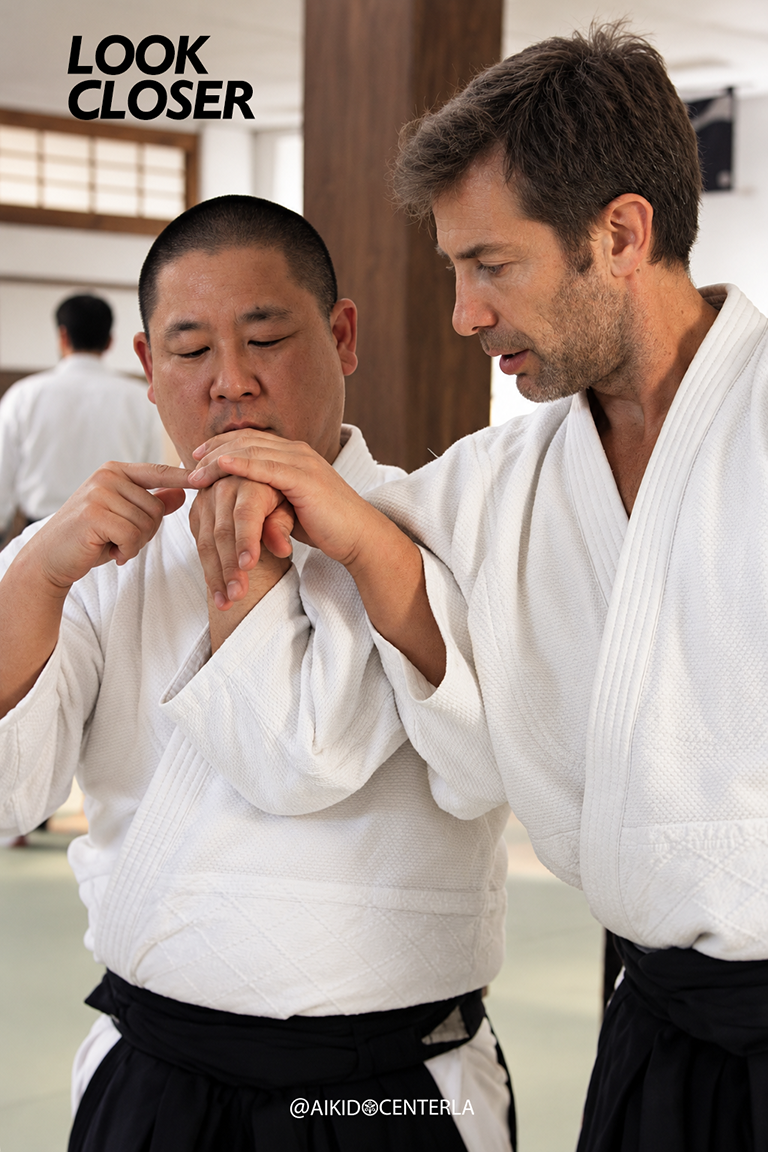
From the Aikido Center of Los Angeles’ Aiki Dojo Message - Learning to See
Sometimes, all it takes is for someone to say something a different way than you normally hear it which causes something inside you to shift and now you see that same thing totally different. But to recognize these moments, we first have to develop the ability to see the differences and details that we previously overlooked.
One of the milestones in a student’s training is when they “can” see that the instructors teach the same technique differently. The technique might be the same, but each instructor has their own nuances, idiosyncrasies, and ways of teaching. Most students think this is frustrating and get upset but it is actually good. If you can’t see that there is a difference, then you probably are at a level where everything looks the same. However, if you can see that there is a difference then your eye is becoming more developed. Think of it like the resolving power of a microscope. As its resolution improves, details that were previously invisible become apparent. This means that your training has gotten to the level where the details are becoming more and more apparent and thus you are starting to actually “learn” Aikido and not just parroting what the teacher is doing.
The ability to differentiate things is not something that a teacher can necessarily teach you. This is something that just happens. The more you train, the more you start to see the details and then those details become patterns and patterns lead to understanding. Most times, the first thing that happens is that you can differentiate what technique the instructor is teaching. Then after a while, you notice the nuance that they are trying to emphasize. The funniest step is when you find yourself rolling your eyes because you start to notice that this particular teacher says the same things over and over or that this teacher always does this technique this particular way. It is funny because in order to be bothered, you have to be able to see it first.
In Japanese, there is a word, miwakeru (見分ける), which means “to distinguish or discern differences.” However, as our ability to discern develops, we can begin to do more than simply identify what is different. We can start to understand why those differences matter. But this skill is not just about determining whether things are good or bad. It is about noticing the details, extrapolating from them, and using them to make inferences. This is where things get interesting. A visiting teacher might teach something differently, you might overhear some seemingly innocuous detail, or you catch something out of the corner of your eye. This detail becomes a tipping point which releases a deluge of wonderment as your mind mulls it over. This small nugget that this person casually just dropped creates a hugely profound impact inside of you.
In traditional training, they used to say that the best teacher is the one that is the most unreasonable. They are unreasonable because they don’t teach you the way you want to be taught. This method forces you out of your comfort zone or forces you to work harder and be more diligent. Thus, even when a teacher is not particularly skilled at teaching, there may still be something valuable to learn. In fact, their shortcomings may force us to become more observant and diligent. What matters is our willingness to search for those small nuggets of understanding, regardless of whether we like the person teaching us.
In Aikido and in life, sometimes the smallest detail can lead to the greatest understanding. But first, we have to develop the eyes to see it and the humility to recognize that anyone can teach us something.
Today’s goal: Look beyond the obvious and find something valuable to learn from every person.
Watch this Ted Talk about how to see