
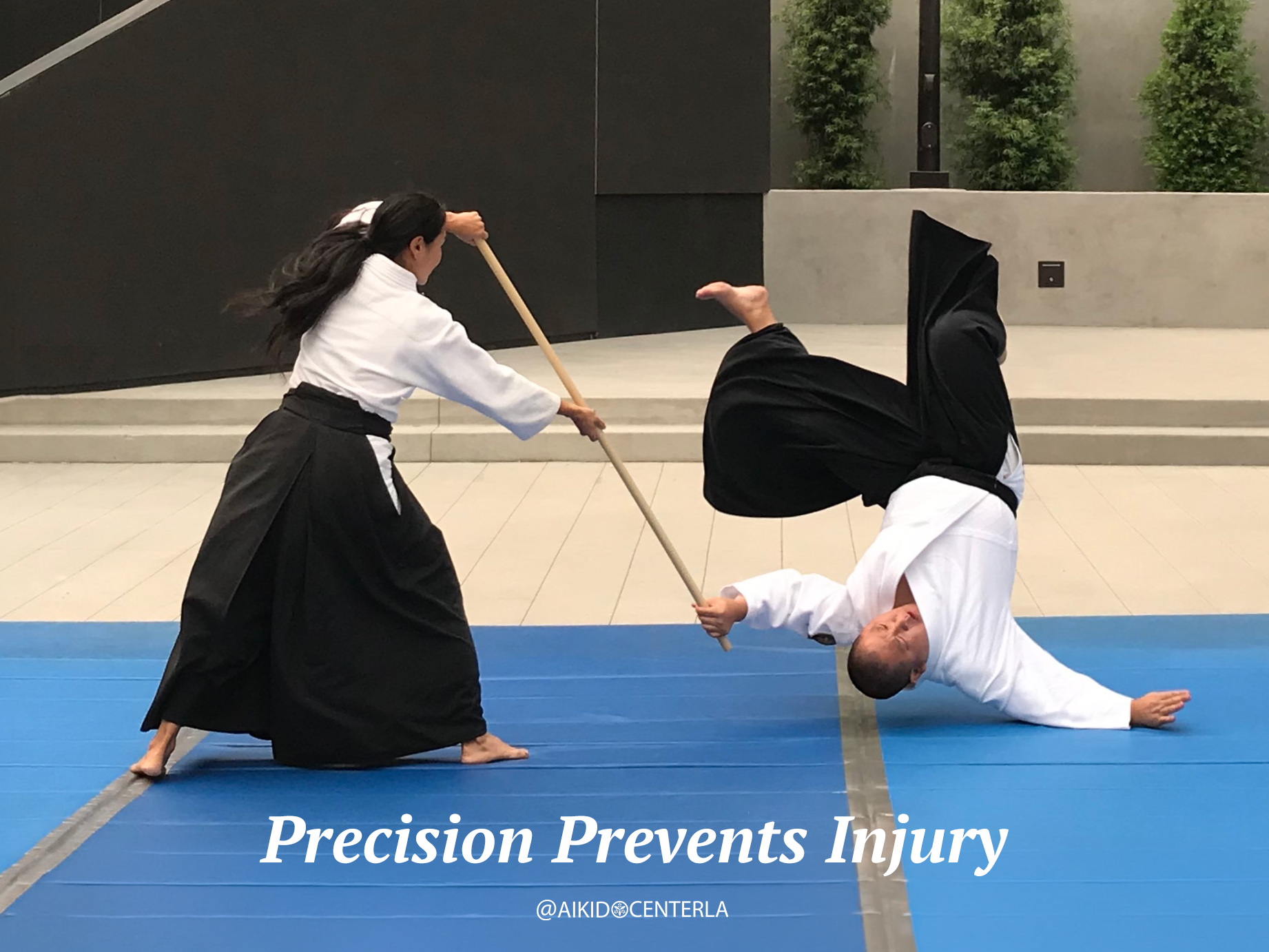
The best Aikidoists take care to not create misunderstandings.
It is easy to take the slightest things personally. It is also easy to think that this person is doing this to us because of some sort of malice.
In daily life, most of us are solipsistic and in our own worlds fighting our own personal battles. Part of what Aikido training is trying to teach us is to become aware of others. That is why Aikido has to be done with a partner. As we learn to do Aikido to others, we learn a kind of body to body communication through movement. The nage’s movements should be clear so that the uke doesn’t misread them and take the wrong ukemi and get hurt.
In the martial arts, everything has to be clearly stated. This is because it is martial which could lead to harm or injury. Thus, anything that we do, say, how we say it or how we do it can lead to resentment. In Japanese, they say, sakaurami (逆恨み) or “unjustified resentment because of misunderstanding.” Because what was said or done was unclear, it could lead to injury or hurt feelings and without any sort of clarity, it can also result in resentment. When I was a beginning student, a black belt beat me up on my second day. For almost four years, I resented this person. After I became a black belt, he shook my hand and said, “I knew you could do it.” Years later, he likes to jokingly tell people that beating me up was for my own good and that he did it because he was “helping me.” Alas, my misunderstanding of his kind cruelty led to resentment.
Teachers or instructors should also make sure that their actions or teachings are clear so as to not create any misunderstandings or cause the students to develop bad habits. Students should also take care to not accidentally act inappropriately and create a misunderstanding. This idea where I think of you and you think of me creates this dojo symbiosis where paradoxically everyone is working together in their own singular pursuits of personal mastery.
The other day, I told the person taking my ukemi in front of the class to tap even if it doesn’t hurt. The reason why they had to tap is because they were demonstrating the proper way to submit. What happened after my demonstration was that no one in the class was tapping and just grimacing in pain. Not tapping as a practice is fine if everyone agrees and is trying to develop their pain tolerance or develop stronger wrists. However, if people are just not tapping because they didn’t know how to submit, it could lead to injury or hurt feelings. The teacher demonstrates the proper way to do the technique. The uke shows the proper way to receive the technique and part of that is demonstrating when, where, and how to submit so that there are no misunderstandings. A misunderstanding of correct ukemi could unknowingly lead to an epidemic of injured wrists which could have simply been avoided had the uke properly demonstrated when and how to tap.
Ideally, proper intention demonstrates proper attitude and decorum. That is why, in Aikido and in Life, we make everything as clear as possible so that there are no misunderstandings and no resentment. Training teaches us to remember that each person is fighting their own personal internal battle and so we try to avoid creating misunderstandings and try to give grace whenever possible.
Today’s goal: Be clear about what you want or what you are doing so that you don’t allow a simple misunderstanding to become a full blown war.
Watch this video to better understand reframing